Blood Disease Epidemic After the Pandemic
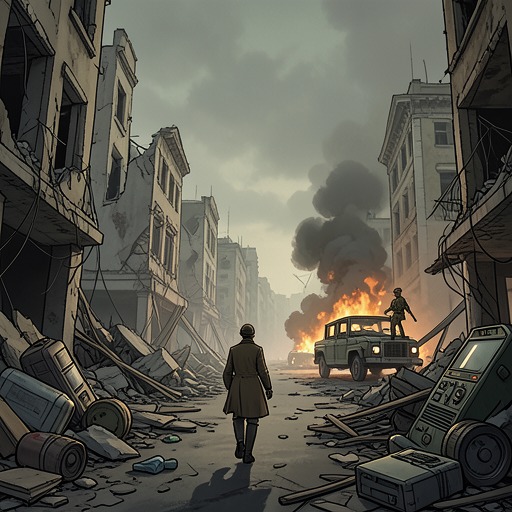
The Dog StarsThe Blood Disease Epidemic After the Pandemic is the lingering public-health disaster that follows the flu pandemic: after the flu kills most people, a second disease claims more lives and continues to threaten the survivors. Its cause is never settled, and the danger is not confined to a distant past. The illness reaches children, takes lives repeatedly within a small Mennonite community, and forces Hig and Bangley to weigh medical uncertainty against the risks of contact and aid.
Emergence and Scale
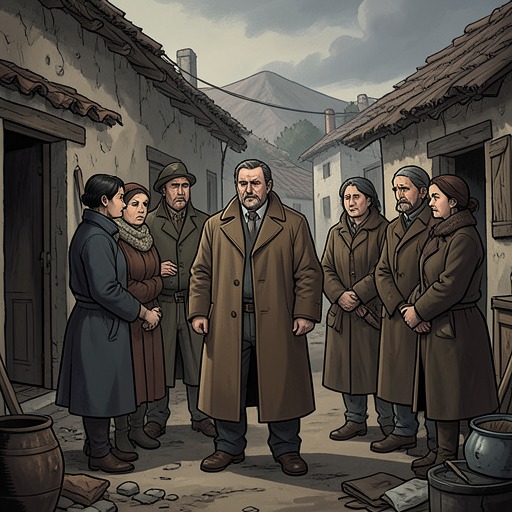
Nine years after the flu, Hig describes the blood disease as a further cause of mass death. Among the survivors, a community of roughly thirty Mennonites lives about ten miles south of the airport. Hig understands that the disease affects the group across generations: children are born with it, members are often sick and weak, and deaths recur every few months. The epidemic is not a single outbreak with a clearly marked end; it remains part of the conditions under which the living organize their days.
Hig estimates, in an argument with Bangley, that even the luckiest affected people may have only a few years left. This is his assessment, not a stated medical prognosis. He points to recurring illness and symptoms involving the skin and respiratory system, while acknowledging the possibility that some people might survive. The distinction matters: the narrative gives evidence of a severe, continuing disease, but not a reliable forecast for any individual or a definitive account of its progression.
Transmission and Medical Uncertainty
The characters’ understanding of transmission is incomplete but consequential. Bangley recalls warnings that infection could pass through more than blood and treats a cough as a possible source of exposure. His concern extends to bodily fluids reaching the eyes or mouth. The warning changes ordinary contact into a perceived hazard, including the sharing of a drink; Bangley stops before finishing a bottle after Hig points out the risk. Neither man can establish the precise probability of transmission from the information available to them.
The proposed origins are similarly unresolved. In a later account of what had been reported, the disease’s predecessor is linked to a supposed superbug mutation combined with bird flu, under the name Africanized bird flu. Early cases were reportedly associated with London, while New Delhi was blamed as the source. The account itself doubts that attribution and relays a rumor of a different chain: a sample transported on a military flight toward England, supposedly after passing through Livermore, with the plane said to have crashed in Brampton. The story presents this as rumor, not verified history, and leaves its speakers with no way to establish where the outbreak began.
A medical explanation discussed later proposes that the onset of an autoimmune disease was accelerated by a breakdown in the body’s ability to produce its own vitamin D. The mechanism is described as curious, and an AIDS-related comparison is raised only as a possible analogy, not as an identification of the disease. This tentative account offers a biological line of inquiry without resolving the epidemic’s origin, its full mechanism, or the relationship between the proposed autoimmune process and every symptom attributed to the blood disease.
Responses and Human Costs
The epidemic makes care a conflict between obligation and self-protection. Hig says that the Mennonites sometimes need his help and argues that they are people trying to remain alive one day at a time. Bangley counters with the deaths he has witnessed and the prospect of continuing illness. Their disagreement is not simply over whether the disease exists: both recognize its severity, but they assign different weight to the chance of helping someone and the possibility of exposure. Hig’s willingness to assist persists despite Bangley’s warnings; the evidence does not establish that either man can control the outcome for the community.
Bangley’s response is visible in an earlier reconnaissance flight with Hig. Looking over their perimeter, he identifies a group he calls Druids as people with blood sickness. He says that two members who came too close were shot and regrets not having incendiary ammunition. The episode shows how fear of infection combines with the armed defense of the airport: the sick are encountered not through a functioning public-health system but within Bangley’s security logic. His actions do not demonstrate that the group posed a confirmed immediate medical threat; they reveal the severity of his approach to perceived danger.
Significance in the Post-Pandemic World
Medical and institutional resources are scarce. Hig identifies himself as having no clear answer to the community’s needs, while a physician encountered in the story identifies as an internist working in public health. That professional background provides context for the later discussion of autoimmune illness, but it does not produce a definitive explanation or a cure. The epidemic therefore persists alongside the loss of reliable communication and care rather than being contained by a known treatment or coordinated response. At St. Vincent’s Hospital, a building taken over during the crisis is described as filling with the dead, an image of medical capacity overwhelmed within the larger catastrophe.
The book also keeps the disease distinct from other forms of loss. Hig grieves the disappearance of trout, and later evidence connects their absence to streams made too warm; the account does not attribute that ecological change to the blood disease. Instead, illness and environmental deterioration coexist as separate pressures on survival. Together they make the survivors’ world more than a story of recovery from one pandemic: even after the first wave has passed, further deaths continue, causes remain disputed, and the people left alive must decide whom they are willing to help.